
Why the best-designed homes don’t just look good — they reduce friction, support routines, and make everyday life feel easier.
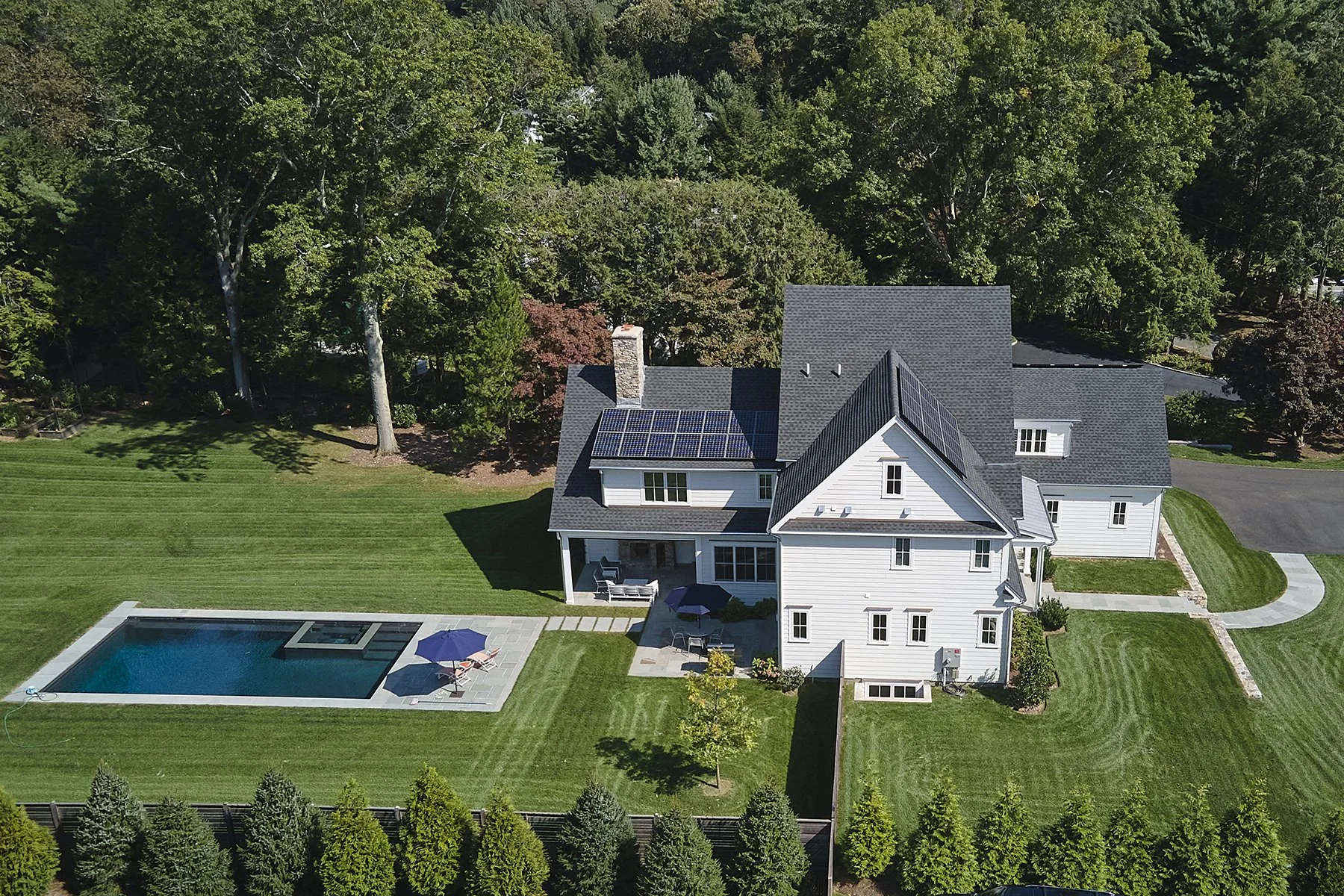
Scope of Work: New Construction Home, Empty Lot Built by The O’Dell Group on Country Road in Westport, Connecticut. Completed: Summer 2019. Image: Videler Photography.
There’s a moment every Fairfield County family knows well. It’s 7:15 on a Tuesday morning. Backpacks need to get to the car, lunches need to get into those backpacks, someone can’t find their cleats, and your coffee is going cold on the counter because you’ve been navigating around people in the kitchen for the last ten minutes. Here’s the thing most people don’t realize: that chaos isn’t a parenting problem. It’s a floor plan problem.
The layout of your home, how rooms connect, where doors open, what you see when you walk in — either supports the way your family actually lives or quietly fights against it. And in Connecticut, where families are busy, active, and running between school, sports, and work, a well-designed floor plan isn’t a luxury. It’s the foundation of a home that feels calm instead of chaotic.
At The O’Dell Group, floor plan design is where every project starts. Not with finishes or fixtures — with how your family moves through the house. Here’s what that looks like in practice.
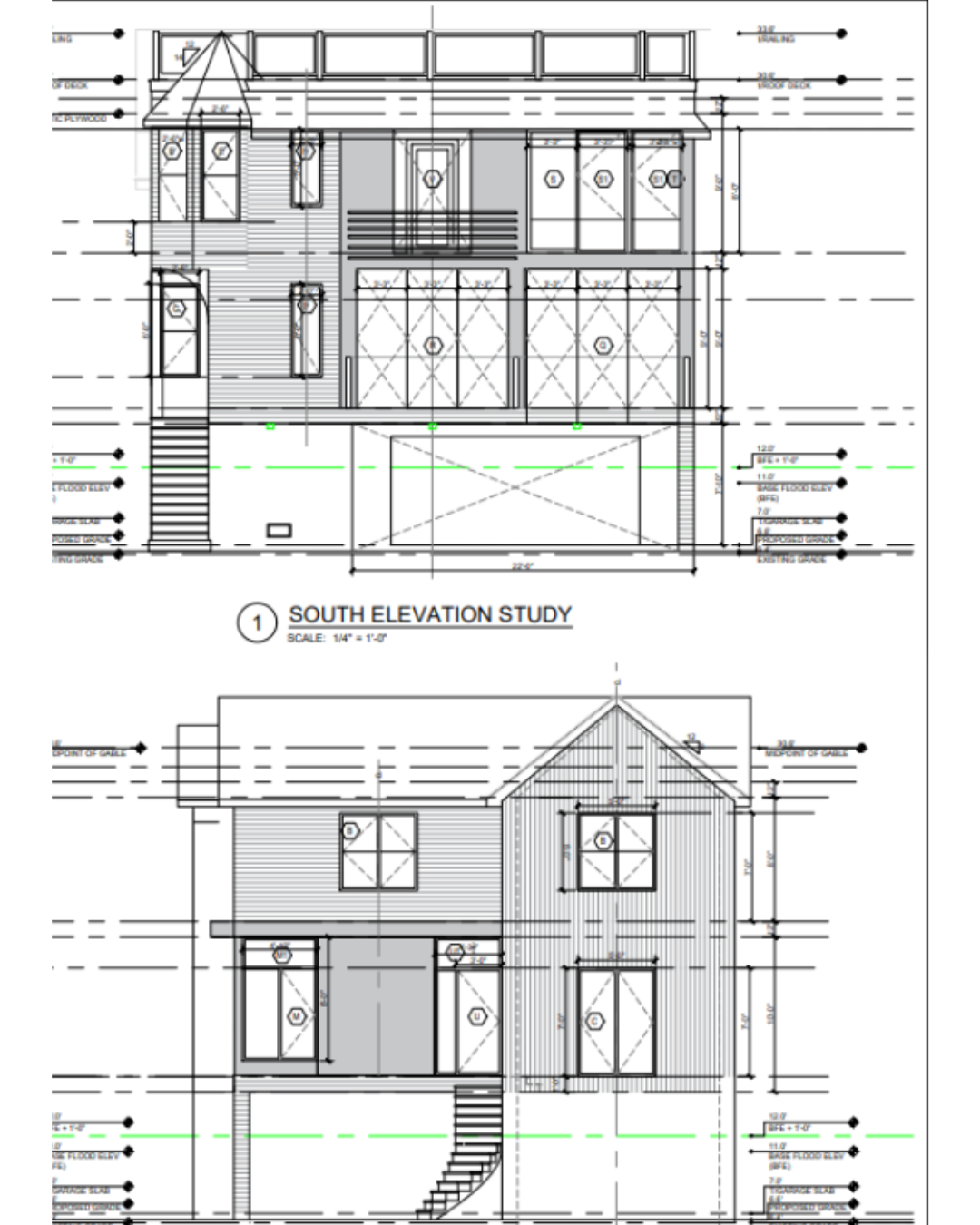
Architectural drawings of 16 Westport Avenue at Compo Beach in Westport. Connecticut. 2026.
How Architects Think About Traffic Flow
When an architect looks at a home, they don’t just see rooms. They see movement paths, the invisible routes people walk dozens of times a day between the kitchen, the front door, the bedrooms, and the garage. These are called circulation patterns, and they’re the skeleton of any good home layout.
Bad traffic flow is easy to spot once you know what to look for. It’s the hallway bottleneck where two people can’t pass without turning sideways. It’s the kitchen island that forces you to walk all the way around to reach the sink. It’s the front door that opens directly into the living room with no transition space — so every arrival feels like an interruption.
These friction points don’t just slow you down. They create stress. Over time, a house with poor traffic flow starts to feel smaller than it is, more cluttered than it should be, and harder to keep organized. You might blame the mess, but the real problem is the map.
The O’Dell Group’s design approach starts by studying how a family actually moves through their day, morning routines, after-school arrivals, evening wind-downs, and then designing circulation paths that make each of those transitions feel effortless. It’s not about adding square footage. It’s about making the square footage you have work smarter.
The Kitchen-to-Mudroom Sequence

If there’s one sequence that defines whether a home works for families, it’s a garage to mudroom to kitchen. That’s the path your family takes multiple times a day, and when it’s designed well, everything about arriving home and leaving again feels seamless.
Think about what happens when your family comes home from soccer practice. Shoes come off. Bags get dropped. Someone needs a snack. If the garage dumps you into a hallway that leads past the living room before you ever reach the kitchen, dirty cleats are tracking across your main living space before anyone even thinks about it.
Now picture the alternative, you walk directly into a mudroom with hooks, cubbies, and a bench. Shoes go on the shelf, bags go on hooks, and the next door opens straight into the kitchen. The mess stays contained and the transition is clean. Everyone knows exactly where things go because the house is designed to make the right behavior the easy behavior.
On The O’Dell Group’s Weed Street project, this sequence was a central design priority. The mudroom-to-kitchen flow was designed so that the family’s daily coming-and-going pattern required zero detours through formal living spaces. The result is a home that manages the messiest moments of the day without any of that mess leaking into the rooms where the family relaxes and entertains.
Why Every Fairfield County Family Needs a ‘Drop Zone’
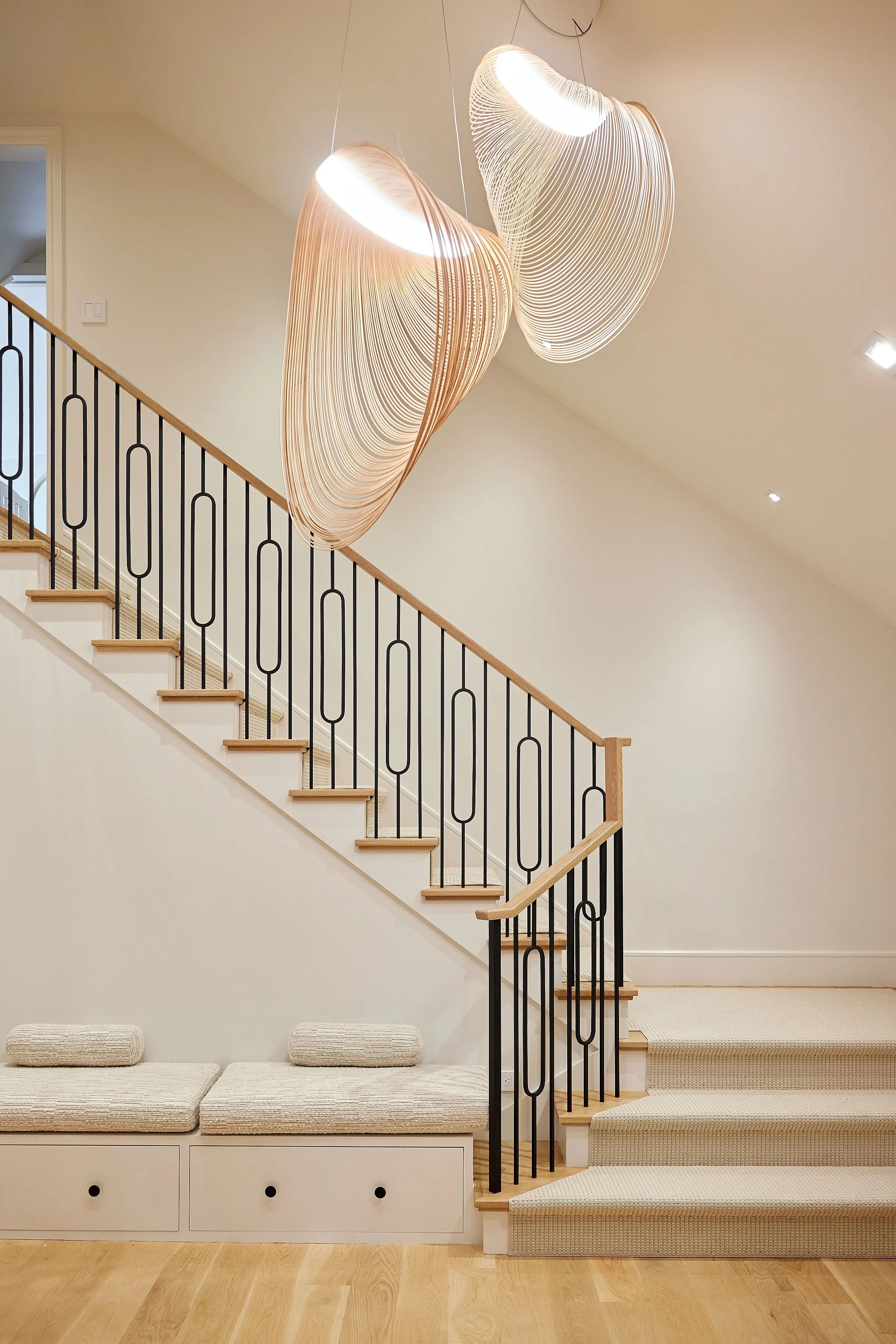
The Foyer at our Bushy Ridge Project
Bushy Ridge Project in Westport combines beauty and function with plenty or storage and space to unwind upon arrival. See more of #ODGxBushyRidge on Instagram.
Let’s be specific about what a drop zone actually is, because it’s more than just a mudroom with a bench. A true drop zone is a purpose-built transition space designed to intercept the daily avalanche of stuff that walks through your door: backpacks, lacrosse sticks, tennis rackets, raincoats, lunch boxes, and the inevitable pile of mail that never quite makes it to the office.
In Fairfield County, where families are juggling multiple kids in multiple sports with multiple schedules, a drop zone isn’t a nice-to-have. It’s infrastructure. Without one, that gear migrates to the kitchen counter, the dining table, the bottom of the stairs — and suddenly your entire first floor feels cluttered even though you just cleaned it two hours ago.
A well-designed drop zone includes dedicated storage for each family member, not a shared hook, but individual cubbies or lockers, plus a place for wet or dirty gear, a charging station for devices, and ideally a small surface for sorting mail or signing permission slips.
The O’Dell Group’s Bushy Ridge Road project is a great example of this done right. The entry points were designed with custom built-in cabinetry that gives every family member their own designated landing spot. It’s organized, it’s beautiful, and most importantly, it actually gets used, because the design makes putting things away easier than leaving them on the floor.
What makes a drop zone work:
Individual storage for each family member: labeled cubbies or lockers, not a shared bench
A dedicated spot for wet or dirty gear that’s separate from clean storage
Hooks at kid-height so children can hang their own coats and bags
A small countertop or shelf for mail, keys, and daily essentials
Proximity to the garage or main entry points: if it’s not on the natural path, it won’t get used
Open Floor Plans: The Truth About What Works
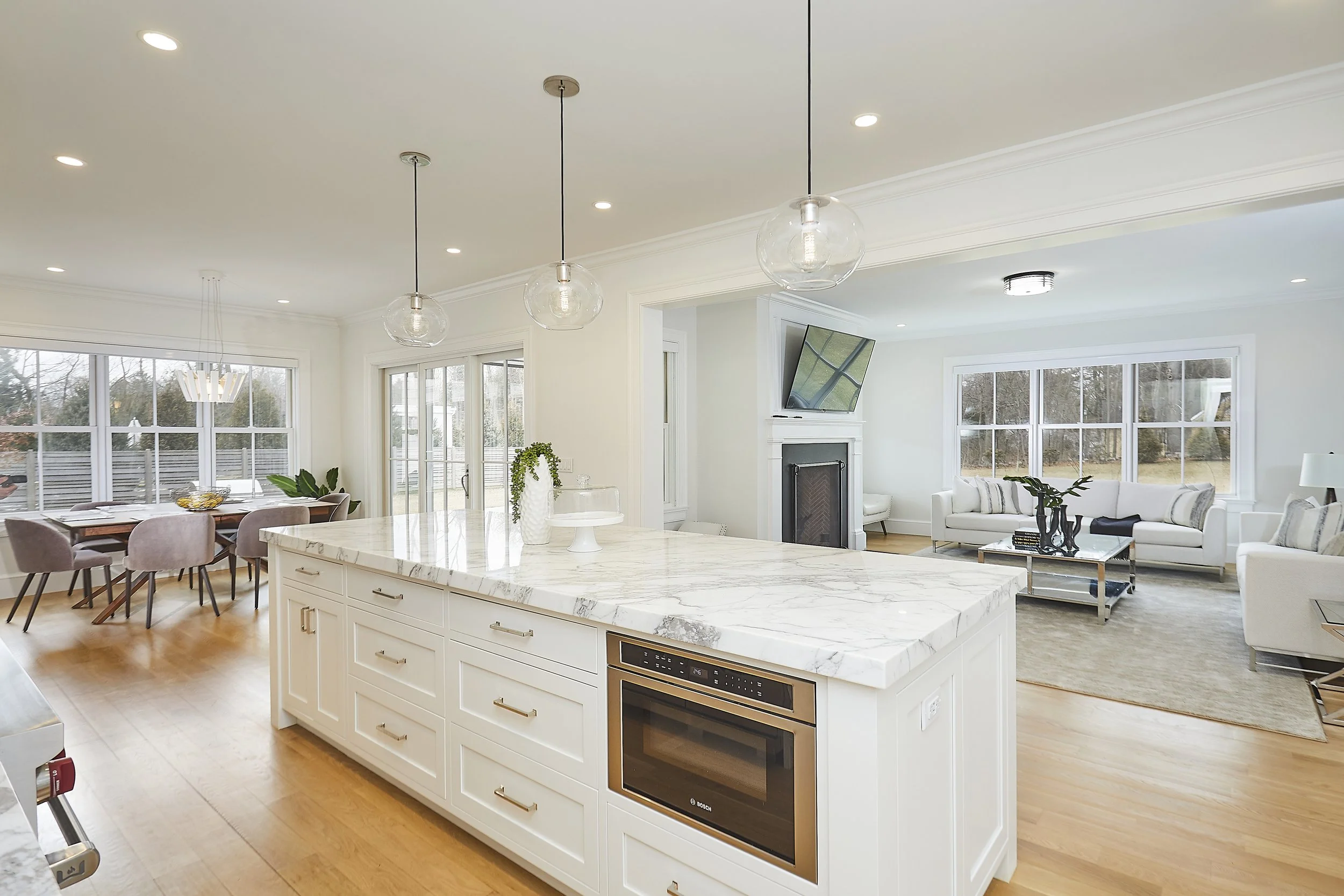
Scope of Work: New Construction Home, Empty Lot Built by The O’Dell Group on Country Road in Westport, Connecticut. Completed: Summer 2019. Image: Videler Photography.
Open floor plans have dominated home design conversations for the last two decades, and for good reason. They create sight lines that make homes feel larger, they let parents keep an eye on kids while cooking, and they’re great for entertaining. But here’s what the trend articles don’t tell you, not all open is good open. A completely open first floor with no definition between spaces can feel like living in a warehouse. There’s nowhere for the eye to rest, no sense of arrival when you move from one area to another, and, most practically, nowhere to contain noise or mess. When the kitchen is fully open to the family room, the sound of the dishwasher competes with the TV, and dinner prep clutter is visible from every angle.
The best open floor plans in Westport and across Fairfield County aren’t truly "open", they’re zoned. They use subtle architectural cues like ceiling height changes, flooring transitions, partial walls, or built-in furniture to create distinct areas within a larger connected space. You get the openness and light without losing the sense that each zone has its own purpose.
On The O’Dell Group’s Country Road project in Westport, the first floor is a masterclass in zoned open living. The kitchen flows into the family room, but a change in ceiling treatment and a carefully placed island create a natural boundary that defines each space without closing anything off. You can see from one end to the other, but the rooms still feel like rooms,not one enormous, undifferentiated box.
Signs your open floor plan needs better zoning:
Kitchen mess is always visible from the living room and you find yourself stress-cleaning constantly
Sound travels everywhere, there’s no quiet zone on the first floor
Furniture feels like it’s floating in the middle of a large room with no anchor
The space reads as one big room in photos rather than a series of connected, inviting areas
The Details Nobody Sees (But Everyone Feels)
There’s a layer of floor plan design that goes beyond room placement and traffic flow. It’s the stuff that’s almost invisible, sight lines, natural light patterns, ceiling heights, but it’s what separates a house that looks nice on paper from a home that actually makes you feel something when you walk through it.
Sight lines are a perfect example. When you stand in the main living area and look toward the back of the house, what do you see? If it’s a wall and a hallway, the space feels closed and limited. If it’s a window framing trees or a view of the yard, the entire room suddenly feels expansive and connected to the outdoors. Great architects design these moments intentionally, they’re called terminal vistas, and they’re one of the most powerful tools in residential design. Natural light is another one. The orientation of your house relative to the sun determines which rooms get morning light, which get afternoon warmth, and which are dim all day. A well-designed floor plan puts the kitchen and breakfast area where they’ll get morning east light, positions the family room for warm afternoon west light, and keeps bedrooms shielded from the harshest direct sun. When this is done right, the house feels naturally warm and inviting without you ever being able to pinpoint exactly why.
Ceiling height plays a similar subtle role. Higher ceilings in gathering spaces — the kitchen, living room, and entry — create a sense of openness and importance. Lower ceilings in intimate spaces like reading nooks, bedrooms, and hallways create a feeling of coziness and enclosure. The contrast between the two is what makes moving through a home feel dynamic rather than monotonous.
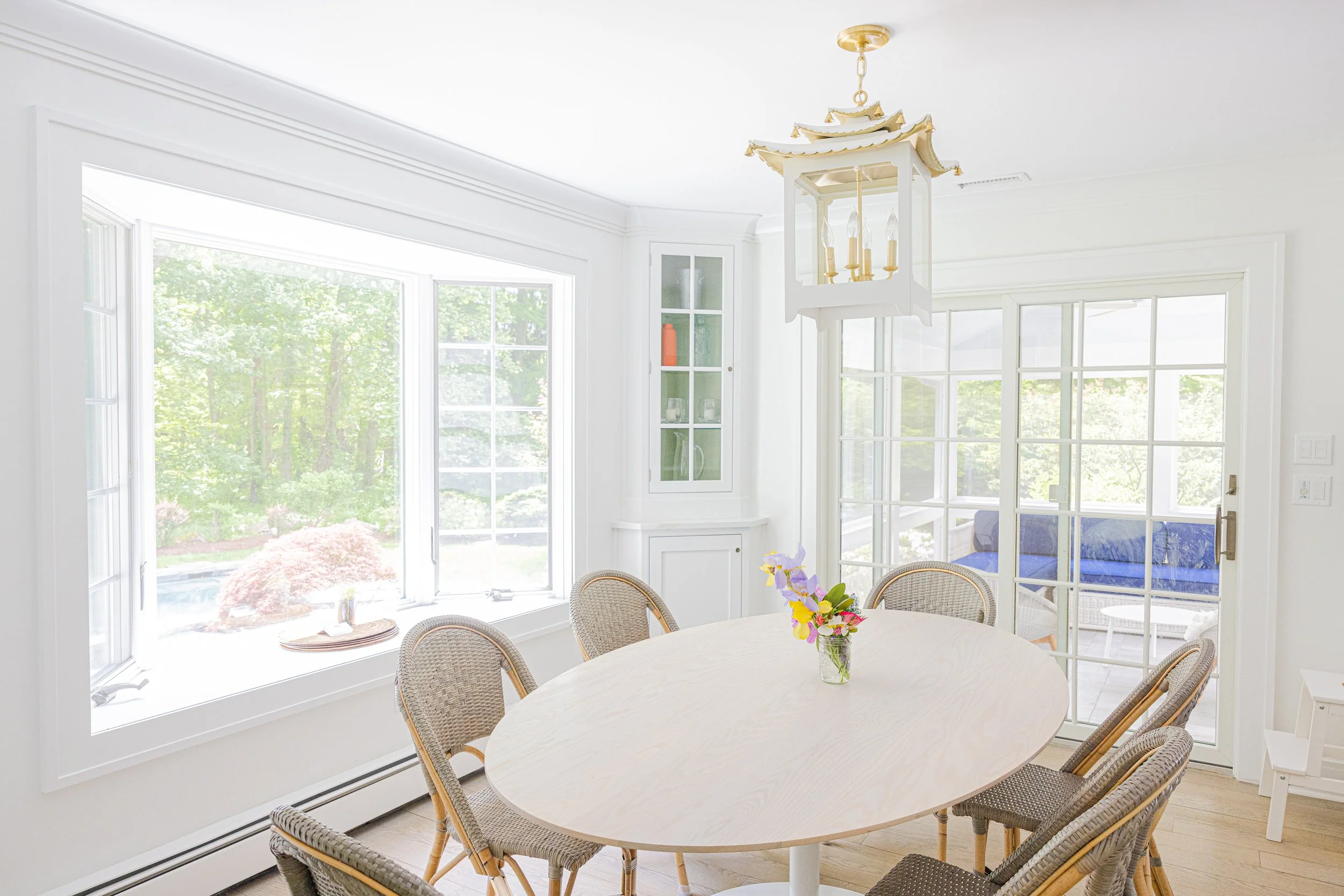
Joanne Lane project in Weston, Connecticut. Kitchen Completed: Summer 2020. Image: Julia Dags. See more: #ODGxJoanneLane
The O’Dell Group’s Joanne Lane project in Weston demonstrates all of these principles in action. The sight lines from the main living areas draw your eye through the house and out to the landscape beyond. Natural light fills the kitchen in the morning and the family room in the evening. And the ceiling heights shift subtly between public and private spaces, creating a rhythm that makes the home feel both grand and intimate depending on where you are.
The Bottom Line: Your Home Should Work With You, Not Against You
A calm home isn’t about minimalism or Marie Kondo-ing your closets. It’s about a floor plan that supports the way your family actually lives — one that manages the flow of people and stuff, gives every activity its own space, and uses light, height, and sight lines to make the whole house feel intentional.
If your current home feels like it’s working against you, if mornings are chaotic, if the kitchen is always crowded, if you can never find a quiet corner, the answer probably isn’t a bigger house. It’s a better-designed house. That’s exactly what The O’Dell Group does for families across Fairfield County. We don’t just build beautiful homes, we design homes that make daily life feel easier, calmer, and more connected. Whether you’re planning a renovation or a new build in Westport, Weston, Fairfield, or anywhere in the county, we’d love to talk about how your floor plan could work harder for your family.
Ready to rethink your home’s layout? Reach out to The O’Dell Group, let’s start with a conversation about how your family lives and how your home can support that better.