
Designing a Better Closet: Practical Design in the Bushy Ridge Primary Suite
Closets are often treated as an afterthought, a place to store, hide, and stack. But in high-functioning homes, they serve a much greater role. When designed properly, they reduce friction, increase efficiency, and create a sense of daily control that’s hard to replicate elsewhere in the home.
At Bushy Ridge in Westport, Connecticut, we approached the primary suite closet with the same level of precision and intentionality as the kitchen or bath. The goal: create a system that streamlines routines, contains visual clutter, and delivers a calming, modern aesthetic — without compromising function. Here’s how we did it.
1. Full-Height Cabinetry to Minimize Visual Disruption
Rather than traditional open shelving or short upper cabinets, we implemented full-height cabinetry throughout the space. This not only maximizes vertical storage, but also eliminates horizontal visual break, giving the space a clean, uninterrupted appearance.
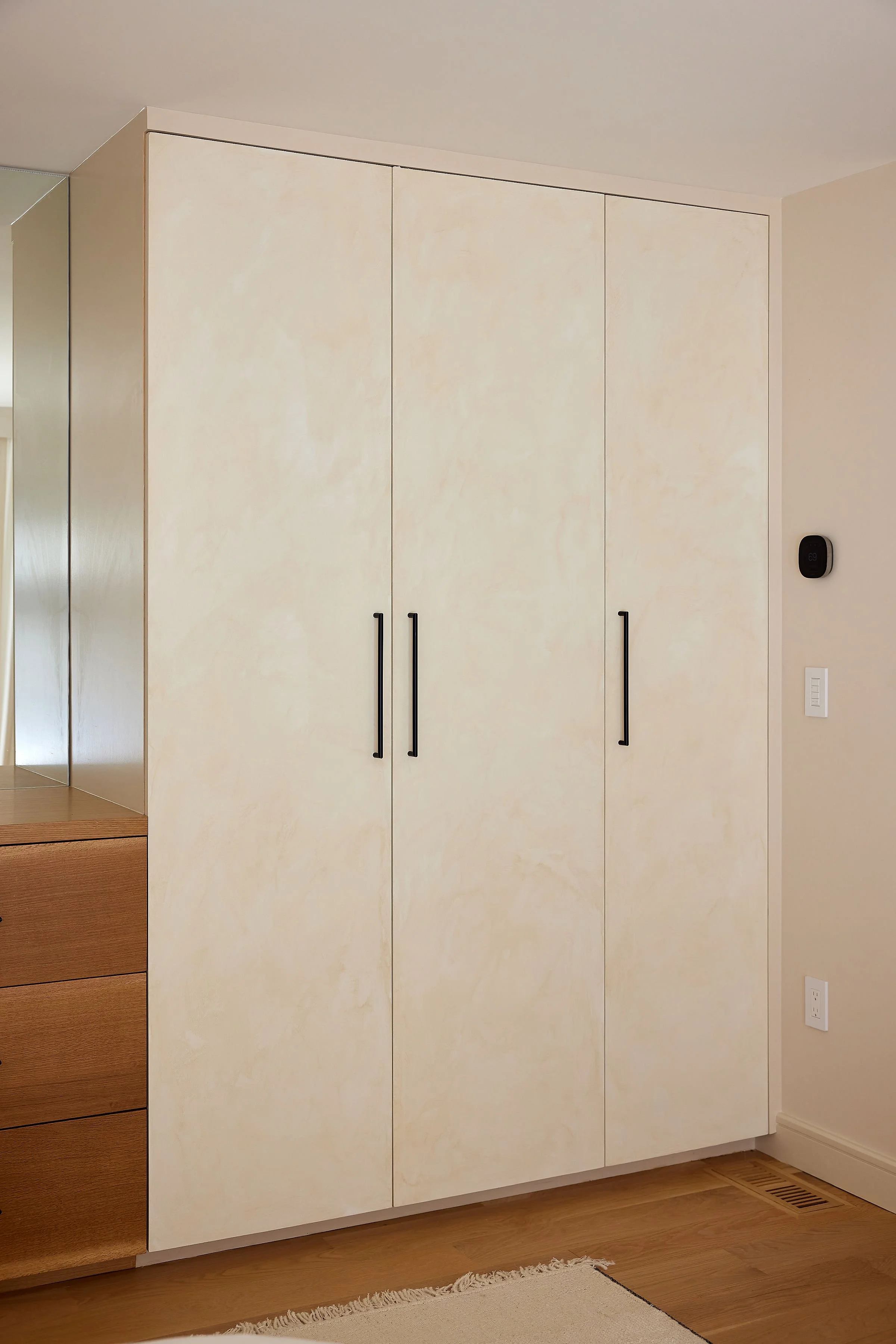
Why it matters: Vertical cabinetry allows for deeper organization and less exposed clutter, which leads to easier maintenance and a more visually calm environment.
2. Integrated Storage Zones for Daily Efficiency
Inside the cabinetry, we built in smart storage zones:
Concealed drawers for undergarments and folded items
Deep shelving for bags, knits, and off-season pieces
Designated area for accessories and eyewear
Hanging sections divided by length and frequency of use

Why it matters: A closet that reflects how you actually get dressed, with quick access to daily essentials and clearly separated occasional wear, significantly cuts down on decision fatigue and disorganization.
3. Mirrored Panels That Serve Multiple Functions
Rather than placing mirrors as an afterthought, we integrated them directly into the built-ins. This helps bounce light around the room (especially important in interior closets), eliminates the need for standalone mirrors, and visually enlarges the space.
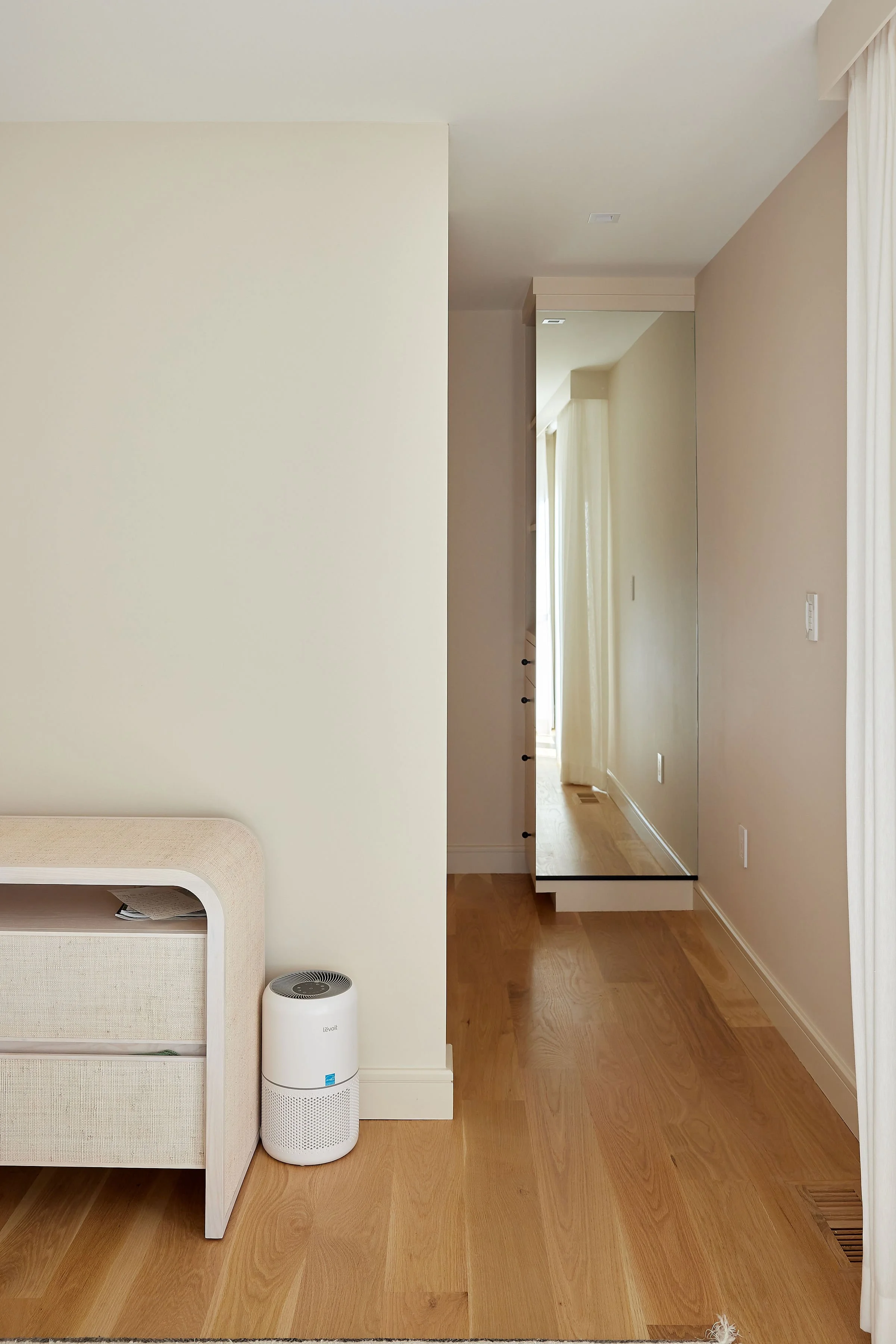
Why it matters: Every design decision needs to earn its place. Mirrors should serve more than one purpose — reflection, light diffusion, and spatial clarity.
4. Clean Lines, Minimal Hardware, Maximum Usability
The millwork throughout Bushy Ridge features flat panel doors, recessed pulls, and low-profile hardware. This keeps the visual language of the space consistent and reduces distractions, making it easier for the eye (and the brain) to stay focused.
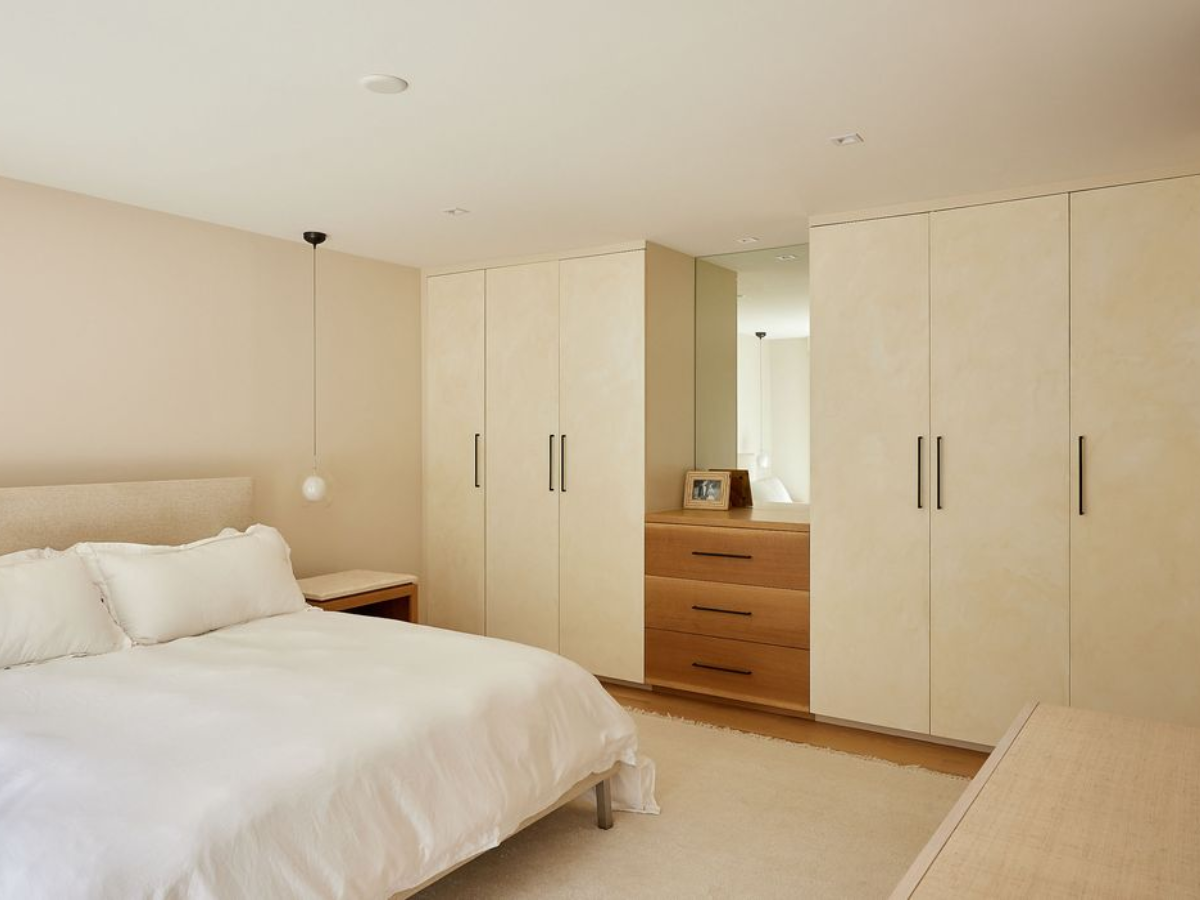
Why it matters: When everything is competing for attention, it’s harder to stay organized. A visually restrained design keeps the emphasis on usability, not styling.
5. The Closet as Part of the Whole-Home Strategy
This primary suite closet wasn’t designed in isolation. It was part of a complete renovation that included smart lighting systems, a wellness-focused lower level, and seamless technology integration. The closet follows the same principle: every design decision supports how the homeowner actually lives, not just how a space looks on paper.
Why it matters: Great closets don’t exist in a vacuum. They should align with the full architectural and interior narrative of the home.
The Result: A Closet That Works… and Stays Working
At The O’Dell Group, we believe that beauty and performance should be built into every square inch of a home — including the closet. The Bushy Ridge wardrobe is a reflection of that: a space that simplifies daily routines, contains visual mess, and creates lasting ease for the people who use it.
Ready for a home that works harder and looks better doing it?
Let’s talk about how we design systems that make your life easier from the inside out.
Photography by Julia Dags | See more from Bushy Ridge here.
